Why Both the Spirit of God & the Spirit of Christ?

Why Both the Spirit of God & the Spirit of Christ?

You, however, are not in the realm of the flesh but are in the realm of the Spirit, if indeed the Spirit of God lives in you. And if anyone does not have the Spirit of Christ, they do not belong to Christ. Romans 8:9 (NIV)

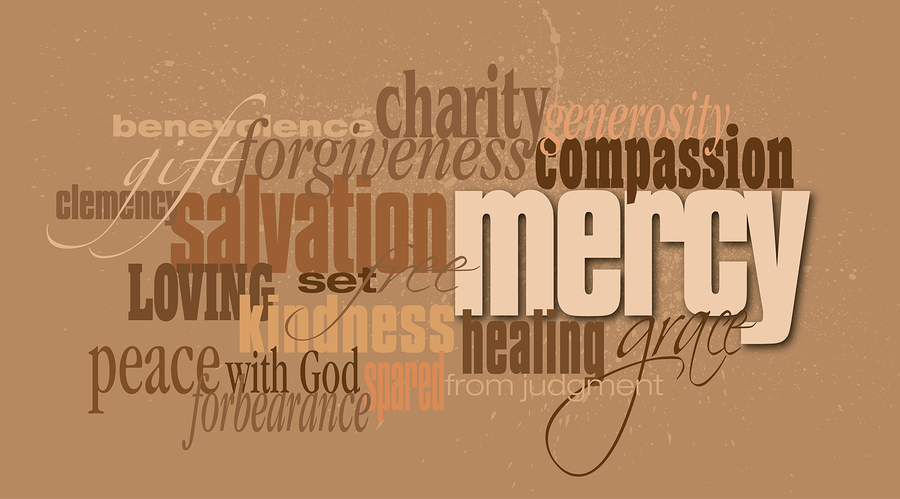
Mercy

In brief, the Spirit of God indwells a person who has accepted the Lord Jesus as their savior. We are a sinner who needs salvation. How do we know if a person is saved? The person will show the Spirit of Christ in their lives. In other words, we will see a likeness of Jesus in the way that they live. We need to study the life of Jesus in order to show the Spirit of Christ in this world. When we observe a person showing the Spirit of Christ in their outward behavior, it is good evidence that the person has the Spirit of God in their inward life.

The Apostle Paul makes it clear that the evidence for true salvation and the indwelling of the Spirit of God is the manifestation of the Spirit of Christ in our daily lives.

Faith: Is it a gift infused, a gift received, or a decision to believe?

Faith: Is it a gift infused, a gift received, or a decision to believe?

For by grace you have been saved through faith,
and that not of yourselves;
it is the gift of God,
not of works, lest anyone should boast. Ephesians 2:8-9 (NKJ)

There are several views of the role of faith in Ephesians Chapter 2 verses 8-9. It might be helpful to examine briefly these views. These two verses are acknowledged to be scripture by those who accept the New Testament. The different concepts of the role of faith come from trying to understand what these two verses mean. There are, at least, three basic views regarding the role of faith in these two verses.

Mercy

In brief, the views are as follows.

1. Faith as an infused gift of God. Faith is believed to be infused into the person who is dead-like. While dead, they become gifted with saving faith. In this sense, faith is an infused gift from God. This view holds that no one is saved unless God imparted the gift of faith into them.

2. Faith as a received gift of God. The gift of faith is welcomed and received by a lost sinner who feels his or her deep need of salvation. With this gift of faith, he or she believes the gospel. This view emphasizes the acceptance of the “gift” of faith by the sinner. The sinner willingly and knowingly receives the gift of faith and has believing faith. In this sense, the sinner willingly, knowingly, and actively receives the gift of faith.

3. Faith as a personal decision to believe the gospel. This view holds that the gift of God does not refer to the word, faith; rather it refers to the whole plan of salvation. This view teaches that the whole “by grace you are saved through faith” plan of salvation is the gift of God. For Israel in the Old Testament, the plan was “by the law you are blessed through obedience.” The OT involved the “keeping the law.” The New Testament involves “faith in Christ.” The OT was a system of “works.” The NT is based upon “grace.”

1. Infused Faith.

Probably the most popular view is that faith is infused into a sinner. Since the human population is held to be incapable of believing the gospel message, it is necessary for God to impart living faith into the dead and unresponsive sinner. After the Holy Spirit has imparted faith into the sinner, the person is able to accept the gospel of salvation.

This view emphasizes the sovereignty of God in saving souls. Whoever God sovereignly chooses to impart life and faith, comes to faith. 

2. Faith is a gift.

It is easy to see why this view would be thought to be the case. A straight forward reading of the passage would lead one to believe that faith was itself the gift. Granting that faith is a gift, a gift still has to be received by the one to whom it is offered. So, even this second view requires acceptance of the gift and belief in the Savior by the lost sinner. In effect, it is similar to the third view. It holds that the sinner has some form of real faith in the value of the offer of the gospel.

3. The gift is not faith but the entire plan of salvation.

To understand this view, one needs to understand that some languages have nouns with gender. For example, nouns in Spanish have masculine, feminine or neuter genders. The words, faith and grace are both feminine in Greek while the word, “that” is neuter. So, the sentence reads as follows.

“For by grace (feminine) you have been saved through faith (feminine), and that (neuter).

Some Greek scholars note that “that (neuter)” must refer to the whole phrase. They argue that if “that (neuter)” referred to “faith (feminine),” the word “that” should be feminine and not neuter.

that” neuter in Greek is “touto, τοῦτο.”

that” feminine in Greek is “taute, ταύτῃ.”

Consequently, the phrase may be read as follows.

(“For by grace are you saved through faith“) that … is the gift of God. It is not the OT system of laws. It is not ours personal merit or our good deeds. The gift of God is the plan of salvation that is offered in free grace to all sinners who come in faith to the Savior.

This view thinks that God’s sovereignty is shown in the words “by grace” and that human responsibility is shown in the words “through faith.” God offers salvation as a gift freely to all. There is just one condition for the gift of salvation. The gift of salvation must be accepted in faith. The free offer of salvation is to all races, nations, tribes, peoples, and languages. It is for wicked sinners, polite sinners, socialites, religious devotees, stoned drug addicts, and social outcasts.

However, there is the one condition on the part of the sinner, “faith.” The sinner must “believe” the gospel of the grace of God. This faith is apart from works. It is a non-meritorious faith, but it is an absolutely necessity. Salvation is offered freely, but the sinner must be received the offer by faith.

This last view holds that God works through the Holy Spirit who convicts, compels, and convinces the sinner of his or her need of salvation. However, the Holy Spirit does not force a sinner to accept the gracious offer of salvation. The sinner may choose to resist the Holy Spirit’s gracious invitation. Furthermore, this view holds that the sinner must really believe the gospel. God cannot believe for us. We must believe, or we will be eternally damned. In this view, human beings have the responsibility (responsibility, i.e., the ability to respond) to accept the gospel message.

This view believes that God’s sovereignty and human responsibility meet in the phrase “for by grace are you saved through faith.” Since there is free grace on God’s part, and, if there is real faith on the sinner’s part, eternal salvation will be the outcome for the sinner.

Have you yourself accepted God’s gracious offer of salvation?

What Is Your Relationship To Christ:

What Is Your Relationship To Christ:

Virgin, Widowed, Divorced, Profane or Harlot?

I promised you to one husband, to Christ,
so that I might present you as a pure virgin to him.
2 Corinthians 11:2 (NIV)

In a letter to the Corinthians, the Apostle Paul wrote that he had promised them to one Husband, so that he might present them to Christ as a pure virgin. And with eager anticipation, we should remain faithful to Christ and look forward to the day when we shall be presented to our Savior, as His heavenly bride.

Then I, John, saw the holy city, New Jerusalem, coming down out of heaven from God, prepared as a bride adorned for her husband. Revelation 21:2 (NKJV)

Jesus is our High Priest

When we turn to the New Testament, we also learn that Jesus Christ is our High Priest.

Therefore, in all things He had to be made like His brethren, that He might be a merciful and faithful High Priest in things pertaining to God, to make propitiation for the sins of the people. Hebrews 2:17 (NKJV)

Seeing then that we have a great High Priest who has passed through the heavens, Jesus the Son of God, let us hold fast our confession. Hebrews 4:14 (NKJV)

Levitical Priest

Now, when we turn to the Old Testament, we find many instructions for the priests in the book of Leviticus.  Here, the LORD commanded the priest that they were to take a virgin for a wife. Now, scripture presents various relationships between a man and a woman. These scriptures are there for our learning, and they are meant to teach us lessons about our relationship with our Savior, Jesus Christ who is both our High Priest and our Husband.

And he [the priest] shall take a wife in her virginity. A widow, or a divorced woman, or profane, or an harlot, these shall he not take: but he shall take a virgin of his own people to wife. Leviticus 21:13-14 (KJV) 1

The requirements of a potential wife for a Levitical priest were that the woman must not be widowed, divorced, profane, or an harlot. What lessons might we gather from these classes of women? What spiritual lessons can we learn from the word of the LORD to the Levitical priests.

Widowed

A widow typifies a believer for whom Christ seems to be dead. Grave Marker for HusbandIt is a believer who does not knowingly enter into a daily and living relationship with Christ. She is like a person who has forgotten that Christ, as her Head, is a living and vital reality. Many times we become so occupied by the affairs of our daily life that we lose our sense of belonging to our Savior. We should be living for Him first and foremost. We feel sad for widows. May we encourage believers first to understand that Christ is alive and cares for them and that they should embrace their living relationship with Him. It is an endearing and an eternal relationship. We should not live as if we were widowed from Christ.

Divorced

A divorced woman typifies a believer who has gone a step further. She has not only lost the sense of Jesus in her life, but she has actively separated herself from Jesus. Perhaps some tragedy has occurred in her life and she has thrown Christianity overboard. She does not want anything to do with faith in Christ. It does not seem real to her, and she is bitter. The trials and tribulations of this life seemed too much to bear for Christ.

These things I have spoken to you, that in Me you may have peace. In the world you will have tribulation; but be of good cheer, I have overcome the world.” John 16:33 (NKJV)

In this you greatly rejoice, though now for a little while, if need be, you have been grieved by various trials. 1 Peter 1:6 (NKJV)

Unless we keep the prize in view, it is easy to get discouraged and and turn aside from Jesus. Let us run the race with endurance and follow the examples of the those who ran the race before us in faith. It wasn’t easy for them, and it will not be easy for us. But, in the end, it is worth it.

Therefore we also, since we are surrounded by so great a cloud of witnesses, let us lay aside every weight, and the sin which so easily ensnares us, and let us run with endurance the race that is set before us, looking unto Jesus, the author and finisher of our faith, who for the joy that was set before Him endured the cross, despising the shame, and has sat down at the right hand of the throne of God. Hebrews 12: 1-2 (NKJV)

Profane

A profane woman typifies a believer who has gone farther astray. She has not only turn away from the heavenly calling of Jesus, but now she finds her joy in what is earthly, carnal, and secular. She has chosen the attractions of this world and its glory and pleasures. She has embraced its ideas and trends. Not only has she divorced Christ, but she has submitted herself to the world as to what truly captivates her heart. In practice, she has disowned the headship of Christ. She now follows the fashions and the ideals of the world. Lust and pride have captivated her heart. She has chosen the world over the Savior, Jesus Christ.

For all that is in the world—the lust of the flesh, the lust of the eyes, and the pride of life—is not of the Father but is of the world. 1 John 2:16 (NKJV)

Harlot

A harlot typifies a person, who, while claiming to be religious, has elevated herself above Christ for the advantages she might gain. In reality, she has no care for Christ. She only uses her relationship to Christianity for her own personal advantage. She will lie with any man to increase her wealth, power, or prestige. In the end, she reminds us of the Mother of Harlots.

The woman was arrayed in purple and scarlet, and adorned with gold and precious stones and pearls, having in her hand a golden cup full of abominations and the filthiness of her fornication. And on her forehead a name was written:

MYSTERY, BABYLON THE GREAT,
THE MOTHER OF HARLOTS
AND OF THE ABOMINATIONS
OF THE EARTH.

I saw the woman, drunk with the blood of the saints and with the blood of the martyrs of Jesus. And when I saw her, I marveled with great amazement. Revelation 17: 4-6 (NKJV)

She only identifies with Christ as a means to attain her own honor, her pride, and her wealth. The first thing that concerns her is the merchandise of gold and the last thing that concerns her are the souls of men. If someone were too poor to enrich her, she, at least, wants their soul’s to submit to her and to give honor to her alone.

“And the merchants of the earth will weep and mourn over her, for no one buys their merchandise anymore: merchandise of gold and silver, precious stones and pearls, fine linen and purple, silk and scarlet, every kind of citron wood, every kind of object of ivory, every kind of object of most precious wood, bronze, iron, and marble; 13 and cinnamon and incense, fragrant oil and frankincense, wine and oil, fine flour and wheat, cattle and sheep, horses and chariots, and bodies and souls of men. Revelation 18: 11-13 (NKJV)

Is your relationship with Jesus and Christianity just to enrich and please yourself? Is it just a good-paying job where people applaud your talent and honor you? Be warned, the spiritual harlot is cast into hell.

Virgin

A virgin woman typifies a believer who has a heart devoted to her beloved, and she will not allow herself to be defiled by man or his carnal wisdom. She owns Christ’s headship and disowns all others. She looks forward to the wedding with her heavenly Bridegroom. Her Bridegroom is the one who is the Lamb who gave His life sacrificially in atonement for her sins on the cross of Calvary.

Let us rejoice and be glad
and give him glory!
For the wedding of the Lamb has come,
and his bride has made herself ready.
Fine linen, bright and clean,
was given her to wear.”
Revelation 19:7-8


1  And he shall take a wife in her virginity. A widow, or one divorced, or a profaned woman, or a harlot, these shall he not take; but a virgin of his own people shall he take to wife. Leviticus 21:13-14 (Jewish Publication Society, Tanakh 1917).

Dead in Sins: What does it mean?

Dead in Sins: What does it mean?

As for you, you were dead in your transgressions and sins,
(Ephesians 2:1 NIV)

But your iniquities have separated you from your God;
Isaiah 59:2 NIV

But the widow who lives for pleasure is dead even while she lives.
1 Timothy 5:6

tombstone

Some view the expression, dead in sins, in Ephesians 2:1 to mean that humankind is like a dead corpse in the death chamber of a funeral morgue—still, motionless, and cold to the touch. Consequently, it is impossible for the dead sinner to respond to the gospel message, anymore than a dead body in a cemetery can comfort the cries of the loved ones who are left behind. However, scripture views death as separation, as when the body is separated from the person’s spirit. The body decays while the non-material human spirit continues its consciousness. At death, there is a separation of the body from the spirit, but not the cessation of the immaterial spirit.

For as the body without the spirit is dead, so faith without works is dead also. James 2:26

Whether it is physical, spiritual, or eternal death, the spirit of man has consciousness. Luke 16:19-31 tells of a person who had died and was in hades. Yet, this person in hades was quite aware of his lost condition and his spiritual doom. Although he was dead spiritually and physically, yet, he was very aware of his lostness.

If death meant that the soul was unconscious and unaware, then the concept of the second death would not make any sense. Twice dead means that we are twice separated from God. A living sinner is temporally dead (separated from God by sins) while living in this world. However, if a person rejects the gospel and physically dies while in his sins, the person is twice dead or eternally separated from God.

But the cowardly, the unbelieving, the vile, the murderers, the sexually immoral, those who practice magic arts, the idolaters and all liars—they will be consigned to the fiery lake of burning sulfur. This is the second death.” Revelation 21:8

However, if the person accepts Jesus as his or her Savior in this life, the person passes from death to life.

We know that we have passed from death to life, … 1 John 3:14

After Adam sinned in the Garden of Eden, he was well aware that he had sinned and was separated from God. He had consciousness and knew what was good and what was evil. It is sin that separates us from God. The apostle Paul uses the term death to express this separation from God. And further, the separation has its source in our evil thoughts and behavior.

There is a danger in the “cold-dead” analogy of the sinner. No one accuses a dead person of sinning or committing a crime. Detective doesn’t snoop around a graveyard to find a suspect for a crime that was committed that morning. This view reduces, if not eliminates, human responsibility altogether. So, although sin has brought in spiritual separation from God, we still have the responsibility (ability to respond) to repent of our sins and to believe the gospel message. The sinner cannot claim that he was insentient, and, as a result, was unable to hear, understand, or respond to the gospel message. Although our sins have put us in a spiritual place of death, God wills that all people come to repentance and be saved.

This is good, and pleases God our Savior, who wants all people to be saved and to come to a knowledge of the truth. For there is one God and one mediator between God and mankind, the man Christ Jesus, who gave himself as a ransom for all people. 1 Timothy 2: 3-6

Instead of a lifeless body floating face down in the ocean, it is as if a person, who could not swim, had carelessly fallen overboard into the ocean. This person would be in a dangerous place of death. However, there is a life-ring that was thrown within reach. It is the person’s choice to grasp the life-ring. Likewise, God has offered a means of salvation to us who would otherwise perish.

For God so loved the world that he gave his one and only Son, that whoever believes in him shall not perish but have eternal life. John 3:16

Total Depravity & the Image of God

Total Depravity & the Image of God

What is meant by the expression Total Depravity? I think the expression conjures up many different ideas. Some think of a depraved creature as an evil freak of nature. It would be something from which everyone would run in horror. For others, a depraved human is someone who looks deceptively good on the outside, but who is always plotting evil deeds on the inside. Even what may appear to be a noble deed must have some evil ulterior motive.

Is this what me mean when we think of total depravity from a Christian perspective? First of all, the word, depravity, is derived from the Latin word, pravus, meaning disordered and not being straight. 1 The thought is that, before the fall of Adam, humankind were in an ordered state. After the sinful fall, humankind became bent or crooked. So, before the fall, Adam and Eve were noble upright and good creatures according to the straight measure of God. After the fall, Adam and Eve were crooked or distorted, and they did not meet the perfectly straight measure of God.

For example, marriage was instituted before the fall of Adam and Eve. They were in paradise enjoying each others in a harmonious companionship of love. Then they sinned, bringing in the fallen state of humankind. But, notice that human marriage, as an institution, continued in the fallen state. In the fallen state, marriage became bent, disordered, and a challenge to maintain in a loving harmonious relationship. Hence, we see that the woman would have sorrow in child birth and her husband would rule over her. Adam had to face the fact that the ground was cursed because he disobeyed God. (Genesis 3:16-17)  A tug-a-war began in marriage because of the fall of the human race. A crookedness or bentness characterized the union of husband and wife. It is no wonder marriage seminars and retreats are so popular. Yet, marriage remains the most rewarding human relationship that a person can enjoy. If marriage were totally depraved in the sense of completely evil, marriage would be something to be avoided at all cost.

However, we recognize that Adam and Eve were married both before and after the fall. The fall did not annihilate the concept of marriage. Marriage was not completely defaced beyond its recognition. Yet, it was not in its pristine condition either. It was bent, marred, tattered or depraved.  Furthermore, it does not mean that marriage is an evil institution because there is depravity in it. Marriage is good and proper; but marriages depravity is expressed in the disharmony that may occur occasionally within the bonds of matrimony.

This illustration of marriage’s depravity could be extended to the human body. Before the fall of Adam and Eve, the human body was straight, i.e., healthy and strong. It would not catch colds or have heart attacks. Their physical senses were such that they could avoid accidents and harm. But after the fall, our bodies could catch a cold, grow old, and finally die. Again, notice that Adam and Eve had good physical bodies before the fall. They also had good bodies after the fall. The difference before and after the fall is the measure of their bodily depravity. Again, the human body is good in itself, but it shows its depravity in disease and death.

Finally, total depravity means that all aspects of a human being are crooked or bent. Total depravity means that the fall influences all aspects of our human experience. This includes our mind, will, soul, body, marriage and family ties, social encounters, economic systems, and governments. You name it and humans have the ability to disorder and disfigure it. Yet, even with human nature being bent, there is still the image and likeness of God in Adam’s descendants.

Humankind still bears the image of God. In fact, the image of God is given as the reason for capital punishment for premeditated murder.

“Whoever sheds human blood,
by humans shall their blood be shed;
for in the image of God
has God made mankind.
Genesis 9:6

This command was given after the fall of Adam. So, we can be assured that after the fall humankind still bears the image of God. To kill another human being is to kill God in effigy. If we understood the true significance of man bearing the image of God, we would treat one another with more respect. Also, we would not to curse our fellow man, because they are made in the likeness of God.

With the tongue we praise our Lord and Father, and with it we curse human beings, who have been made in God’s likeness. James 3:9

Now, if human beings were totally depraved in the sense that they were totally evil, scripture would not speak of them still bearing the image and likeness of God. Total depravity and the image and likeness of God are expressed in every human being. There is a danger in concentrating so much upon the depravity of humankind that we forget the divine image that each one bears. The image and likeness are there, but it is bent, tattered, and dim, but not totally destroyed. Our bentness and depravity show that we are truly sinners.

Our depravity is displayed in our sinful thoughts and deeds. We have all sinned and come short of God’s perfect moral standards. Therefore, we have all sinned and need the redemption that is offered in God’s love for the world. Have you repented of your sins and accepted God’s gracious offer of salvation?

For God so loved the world that he gave his one and only Son, that whoever believes in him shall not perish but have eternal life. John 3:16.


1 Depravity, fron the Latin pravitas and pravus, in Greek ραιβος, and the Hebrew רע to be disordered, or put out of its estabilished order,” … “Depravity or depravation implies crookedness or distortion from the regular course;”  George Crabb,  English Synonymes: With Copious Illustrations and Explanations, Drawn from the Best Writers, Harper & Brothers, New York, 1837,  p. 128.

Category Test

The majesty of the mountains and the expanse of the oceans remind us of the majesty, wisdom, and power of God.  It causes us to question and reflect upon our purpose and role within creation. Who is the Creator of the universe and what is our relationship to this Creator?  What should our relationship be to other humans as well as to the rest of creation?

What is the relationship between faith and reason?  Why is evil such a difficult problem?  What is the purpose of death and the grave?  Are they the final end of our human existence when we die and become food for microbes.  There have been numerous and conflicting answers to these questions during the course of history.  So, maybe we should ask ourselves if it is even possible to know whether or not our answers are correct?  Maybe the answer is that there are no real answers to life’s questions.  Perhaps, our questions are just the meaningless occupation of over-sensitive fools.

Sample Theology Post

Lorem Ipsum is simply dummy text of the printing and typesetting industry. Lorem Ipsum has been the industry’s standard dummy text ever since the 1500s, when an unknown printer took a galley of type and scrambled it to make a type specimen book. It has survived not only five centuries, but also the leap into electronic typesetting, remaining essentially unchanged. It was popularised in the 1960s with the release of Letraset sheets containing Lorem Ipsum passages, and more recently with desktop publishing software like Aldus PageMaker including versions of Lorem Ipsum. Lorem Ipsum is simply dummy text of the printing and typesetting industry. Lorem Ipsum has been the industry’s standard dummy text ever since the 1500s, when an unknown printer took a galley of type and scrambled it to make a type specimen book. It has survived not only five centuries, but also the leap into electronic typesetting, remaining essentially unchanged. It was popularised in the 1960s with the release of Letraset sheets containing Lorem Ipsum passages, and more recently with desktop publishing software like Aldus PageMaker including versions of Lorem Ipsum. Lorem Ipsum is simply dummy text of the printing and typesetting industry. Lorem Ipsum has been the industry’s standard dummy text ever since the 1500s, when an unknown printer took a galley of type and scrambled it to make a type specimen book. It has survived not only five centuries, but also the leap into electronic typesetting, remaining essentially unchanged. It was popularised in the 1960s with the release of Letraset sheets containing Lorem Ipsum passages, and more recently with desktop publishing software like Aldus PageMaker including versions of Lorem Ipsum.

Sample Apologetics Post

Lorem Ipsum is simply dummy text of the printing and typesetting industry. Lorem Ipsum has been the industry’s standard dummy text ever since the 1500s, when an unknown printer took a galley of type and scrambled it to make a type specimen book. It has survived not only five centuries, but also the leap into electronic typesetting, remaining essentially unchanged. It was popularised in the 1960s with the release of Letraset sheets containing Lorem Ipsum passages, and more recently with desktop publishing software like Aldus PageMaker including versions of Lorem Ipsum. Lorem Ipsum is simply dummy text of the printing and typesetting industry. Lorem Ipsum has been the industry’s standard dummy text ever since the 1500s, when an unknown printer took a galley of type and scrambled it to make a type specimen book. It has survived not only five centuries, but also the leap into electronic typesetting, remaining essentially unchanged. It was popularised in the 1960s with the release of Letraset sheets containing Lorem Ipsum passages, and more recently with desktop publishing software like Aldus PageMaker including versions of Lorem Ipsum. Lorem Ipsum is simply dummy text of the printing and typesetting industry. Lorem Ipsum has been the industry’s standard dummy text ever since the 1500s, when an unknown printer took a galley of type and scrambled it to make a type specimen book. It has survived not only five centuries, but also the leap into electronic typesetting, remaining essentially unchanged. It was popularised in the 1960s with the release of Letraset sheets containing Lorem Ipsum passages, and more recently with desktop publishing software like Aldus PageMaker including versions of Lorem Ipsum.

Sample Social Post

Lorem Ipsum is simply dummy text of the printing and typesetting industry. Lorem Ipsum has been the industry’s standard dummy text ever since the 1500s, when an unknown printer took a galley of type and scrambled it to make a type specimen book. It has survived not only five centuries, but also the leap into electronic typesetting, remaining essentially unchanged. It was popularised in the 1960s with the release of Letraset sheets containing Lorem Ipsum passages, and more recently with desktop publishing software like Aldus PageMaker including versions of Lorem Ipsum. Lorem Ipsum is simply dummy text of the printing and typesetting industry. Lorem Ipsum has been the industry’s standard dummy text ever since the 1500s, when an unknown printer took a galley of type and scrambled it to make a type specimen book. It has survived not only five centuries, but also the leap into electronic typesetting, remaining essentially unchanged. It was popularised in the 1960s with the release of Letraset sheets containing Lorem Ipsum passages, and more recently with desktop publishing software like Aldus PageMaker including versions of Lorem Ipsum. Lorem Ipsum is simply dummy text of the printing and typesetting industry. Lorem Ipsum has been the industry’s standard dummy text ever since the 1500s, when an unknown printer took a galley of type and scrambled it to make a type specimen book. It has survived not only five centuries, but also the leap into electronic typesetting, remaining essentially unchanged. It was popularised in the 1960s with the release of Letraset sheets containing Lorem Ipsum passages, and more recently with desktop publishing software like Aldus PageMaker including versions of Lorem Ipsum.

Privacy Policy

Who we are

Our website address is: https://christiantreasury.net.

What personal data we collect and why we collect it

Comments

When visitors leave comments on the site we collect the data shown in the comments form, and also the visitor’s IP address and browser user agent string to help spam detection.

An anonymized string created from your email address (also called a hash) may be provided to the Gravatar service to see if you are using it. The Gravatar service privacy policy is available here: https://automattic.com/privacy/. After approval of your comment, your profile picture is visible to the public in the context of your comment.

Media

If you upload images to the website, you should avoid uploading images with embedded location data (EXIF GPS) included. Visitors to the website can download and extract any location data from images on the website.

Contact forms

Cookies

If you leave a comment on our site you may opt-in to saving your name, email address and website in cookies. These are for your convenience so that you do not have to fill in your details again when you leave another comment. These cookies will last for one year.

If you visit our login page, we will set a temporary cookie to determine if your browser accepts cookies. This cookie contains no personal data and is discarded when you close your browser.

When you log in, we will also set up several cookies to save your login information and your screen display choices. Login cookies last for two days, and screen options cookies last for a year. If you select “Remember Me”, your login will persist for two weeks. If you log out of your account, the login cookies will be removed.

If you edit or publish an article, an additional cookie will be saved in your browser. This cookie includes no personal data and simply indicates the post ID of the article you just edited. It expires after 1 day.

Embedded content from other websites

Articles on this site may include embedded content (e.g. videos, images, articles, etc.). Embedded content from other websites behaves in the exact same way as if the visitor has visited the other website.

These websites may collect data about you, use cookies, embed additional third-party tracking, and monitor your interaction with that embedded content, including tracking your interaction with the embedded content if you have an account and are logged in to that website.

Analytics

Who we share your data with

How long we retain your data

If you leave a comment, the comment and its metadata are retained indefinitely. This is so we can recognize and approve any follow-up comments automatically instead of holding them in a moderation queue.

For users that register on our website (if any), we also store the personal information they provide in their user profile. All users can see, edit, or delete their personal information at any time (except they cannot change their username). Website administrators can also see and edit that information.

What rights you have over your data

If you have an account on this site, or have left comments, you can request to receive an exported file of the personal data we hold about you, including any data you have provided to us. You can also request that we erase any personal data we hold about you. This does not include any data we are obliged to keep for administrative, legal, or security purposes.

Where we send your data

Visitor comments may be checked through an automated spam detection service.

Your contact information

Additional information

How we protect your data

What data breach procedures we have in place

What third parties we receive data from

What automated decision making and/or profiling we do with user data

Industry regulatory disclosure requirements