Prophesying in the New Testament assembly

Prophesying in the New Testament assembly

But he who prophesies speaks edification and exhortation and comfort to men.
1 Corinthians 14:3 (KJV)

by
Ted J McDonald


Click on audo player to enjoy some background music.

 
Edification is for building up the Mind to know intellectually the Truth
Exhortation is for convicting the Conscience to live morally in what is ethically Good
Comfort is for encouraging the Heart to rest in God’s Love

Street in Old Jerusalem
Click image to view

When I think of 1 Corinthians 14 verse 3, I think this verse is a good standard for ministry to the saints of God.

  •  Does the speaker’s message build up (edify) the mind in the truth of God’s word?
  •  Does it exhort the listener’s conscience to avoid evil and live in a manner that is morally commentable?
  •  Do the words comfort believers with God’s love and care as they pass through this fallen and sinful world? Does the talk reassure a saint who may be experiencing pain, tragedy, loss, and grief?

Also, it would seem that one who prophesies in the assembly should present a balanced message that includes all three aspects of prophesying: edification, exhortation, and comfort.

Also, the order seems significant.

  •  Firstly, the truth is foundational and provides the intellectual justification for living a morally righteous life and the knowledge that, “all things work together for good to them that love God, to them who are the called according to his purpose.” Romans 8:28 (KJV).
  •  Secondly, if we live a morally degraded life, we cannot expect to enjoy the love of God. Hence, we need to be admonished to turn from our evil behavior to enjoy truly God’s love.
  •  Thirdly, knowing the truth and living a godly life does not mean that we will have a life free from all sorrow, pain, or disappointment. “In fact, everyone who wants to live a godly life in Christ Jesus will be persecuted” 2 Timothy 3:12 (NIV). So, during our journey homeward, we need to be especially comforted by God’s strengthening promises and heartening love. Who shall separate us from the love of Christ? shall tribulation, or distress, or persecution, or famine, or nakedness, or peril, or sword? Romans 8:35

Jesus: His Person And Work

Jesus: His Person And Work

It all comes down to Christ alone: who He is and what He did. As to who He is, Jesus Christ is the divine Son of God. As to what He did, Jesus Christ accomplished our eternal redemption by being crucified for our sins and raised again for our justification (Romans 4:25). His person (Jesus Christ) and His work (crucified and resurrected) accomplish our eternal salvation. Like the Apostle Paul, may our focus be on Jesus Christ and Him crucified.

For I resolved to know nothing while I was with you except Jesus Christ and him crucified. 1 Corinthians 2:2

His return is our blessed hope too.

while we wait for the blessed hope—the appearing of the glory of our great God and Savior, Jesus Christ, Titus 2:13 NIV

Jesus: Apostle and High Priest

Jesus: Apostle and High Priest

Wherefore, holy brethren, partakers of a heavenly calling, consider the Apostle and High Priest of our confession, even Jesus.  Hebrews 3:1 ASV

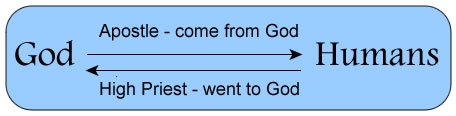
Jesus knowing that the Father had given all things into his hands, and that he was come from God (as an apostle), and went to God (as a high priest).  John 13:3 (ASV)

Apostle and High Priest

In John Chapter 13, it is easy to miss the significance of the simple phrases: come from God and went to God, and how these phrases relate to the apostleship and priesthood of Jesus. Literally, the word apostle (ἀπόστολος) means “one sent forth” (ἀπό, apo, from; στολος, stello, to send).  Thus, an apostle is a person who is sent as a messenger or delegate to represent someone. In the case of the Lord Jesus, He was sent from God to proclaim His good news to sinners who are lost and without hope in this world. In contrast, a priest is someone who comes to God on the behalf of a person or persons.

In John’s Gospel, chapter 13 and verse 3 represent a turning point. In the first twelve chapters, we have Jesus coming as an apostle from God to man. But, here Jesus sets aside His role as an apostle and takes up His role as priest.

As our priest, the first thing he does is wash our feet. Here we are viewed as having our bodies already washed and cleansed from our sins. However, as we travel life’s journey our feet become defiled from the evils of this world.  As a result, since our bodies have already been cleansed, we need only to have our feet washed.

He riseth from supper, and laid aside his garments; and took a towel, and girded himself. After that he poureth water into a bason, and began to wash the disciples’ feet, and to wipe them with the towel wherewith he was girded. John 13:4-5

In John Chapter 14:2-3, Jesus tells us that His departure to heaven is necessary for Him to prepare our heavenly abode. We are promised that we will have His peace while He is away. In Chapter 15:26, we have the promise that the Comforter, the Holy Spirit, will be sent to be with us during His absence. Chapter 16:13 instructs His disciples that He will send the Spirit to guide them into all truth. In John Chapter 17, we have the Lord’s Prayer in His role as our faithful high priest.

These words spake Jesus, and lifted up his eyes to heaven, and said, Father, the hour is come; glorify thy Son, that thy Son also may glorify thee. John 17:1

In verse 11, Jesus prays that His own are kept in unity while they are in this hostile world.  

And now I am no more in the world, but these are in the world, and I come to thee. Holy Father, keep through thine own name those whom thou hast given me, that they may be one, as we are. John 17:11

Jesus: A Three-Fold Shepherd

Jesus: A Three-Fold Shepherd

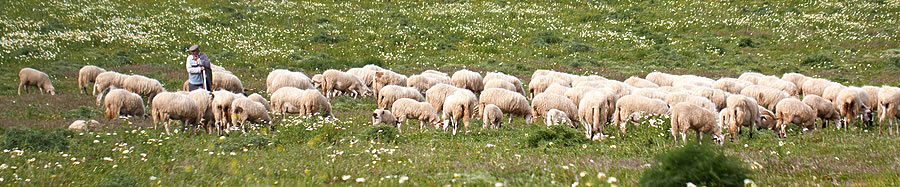
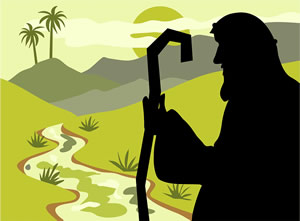
Shepherd with his flock

Good Shepherd (past)

As the Good Shepherd, Jesus gave His life for the sheep.  We look back to the cross where we see Jesus, as a shepherd, dying upon the cross for us. His death and resurrection were necessary for our redemption. It is through His precious blood that our sins may be forgiven.

“I am the good shepherd. The good shepherd gives His life for the sheep. John 10:11

Great Shepherd (present)

As the Great Shepherd, Jesus works now in our lives to do good works, so that our lives are lived according to the will of God in a way that is pleasing to HIm. 

Now may the God of peace who brought up our Lord Jesus from the dead, that great Shepherd of the sheep, through the blood of the everlasting covenant, make you complete in every good work to do His will, working in you what is well-pleasing in His sight, through Jesus Christ, to whom be glory forever and ever. Amen. Hebrews 13:20-21

Chief Shepherd (future)

As the Chief Shepherd, Jesus will give a crown of glory as a reward for a life lived for Him. May we live our lives in view of the future when Christ will return to reign.

when the Chief Shepherd appears, you will receive the crown of glory that does not fade away. 1 Peter 5:4

Five Shepherds of Zechariah 11

Five Shepherds of Zechariah 11

In the eleventh chapter of Zechariah, there are five shepherds mentioned.

1. Jesus as Shepherd

The first shepherd is the Lord Jesus Christ who fed Israel during His ministry among them.  Israel is termed a ‘flock for slaughter,’ because its national leaders would reject Him, resulting in the nation of Israel’s slaughter by the Roman army under General Titus. In particular, Jesus blessed the poor of the flock with His teachings and demonstrations of miraculous powers. His grace brought salvation to sinners, and His unity brought harmony between people from diverse social backgrounds. He fed the flock with grace and truth (grace and truth came through Jesus Christ. John 1:17).

So I fed the flock for slaughter, in particular the poor of the flock. I took for myself two staffs: the one I called Beauty (Grace), and the other I called Bonds (Unity); and I fed the flock. Zechariah 11:7

2. Three Shepherds

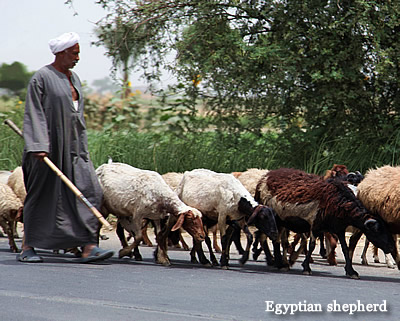
Israel’s religious leaders are here termed, shepherds. The Herodians (political party), Sadducces (liberal party), and Pharisees (conservative party ) disliked each other, but they could agree in their hatred of Jesus. Egyptian Shepherd At the end of Jesus’ ministry, these three shepherds sought to trap Jesus with their questions. In Matthew 22, we have the account where Jesus faced all three and answered all three of them. Afterwards,  in Chapter 23, He expressed His loathing of them.

I dismissed the three shepherds in one month. My soul loathed them, and their soul also abhorred me. Zechariah 11:8

And they sent to Him their disciples with the Herodians, saying, “Teacher, we know that You are true, and teach the way of God in truth; nor do You care about anyone, for You do not regard the person of men. Tell us, therefore, what do You think? Is it lawful to pay taxes to Caesar, or not?” Matthew 22:16-17

The same day the Sadducees, who say there is no resurrection, came to Him and asked Him, Matthew 22:23

But when the Pharisees heard that He had silenced the Sadducees, they gathered together. Then one of them, a lawyer, asked Him a question, testing Him, and saying, Matthew 22:34-35

The prophecy of Zechariah continues and gives the exact amont of silver that Judas was paid to betray Jesus.

Then I said to them, “If it is agreeable to you, give me my wages; and if not, refrain.” So they weighed out for my wages thirty pieces of silver. Zechariah 11:12

3. Future Foolish Shepherd

Finally, Zechariah prophesied about a foolish and worthless shepherd who will be a future leader of Israel. Because Israel rejected their true Shepherd, they will be deceived and follow the Anti-Christ who is yet to appear according to many biblical prophecies.

And the Lord said to me, “Next, take for yourself the implements of a foolish shepherd.  For indeed I will raise up a shepherd in the land who will not care for those who are cut off, nor seek the young, nor heal those that are broken, nor feed those that still stand. But he will eat the flesh of the fat and tear their hooves in pieces.

“Woe to the worthless shepherd,
Who leaves the flock!
A sword shall be against his arm
And against his right eye;
His arm shall completely wither,
And his right eye shall be totally blinded.” Zechariah 11:15-17

These following verses from various scriptures describe the coming Anti-Christ. The God of his fathers refers to the Almighty God of the Old Testament while the desire of women refers to Israel’s promised Messiah who would be born of a woman. It was the desire of a woman to have the priviledge to give birth to the Messiah who would deliver Israel from their oppressors.

“Then the king shall do according to his own will: he shall exalt and magnify himself above every god, shall speak blasphemies against the God of gods, and shall prosper till the wrath has been accomplished; for what has been determined shall be done. He shall regard neither the God of his fathers nor the desire of women, nor regard any god; for he shall exalt himself above them all. Daniel 11:36-37.

He will oppose and will exalt himself over everything that is called God or is worshiped, so that he sets himself up in God’s temple, proclaiming himself to be God. 2 Thessalonians 2: 4

Who is a liar but he who denies that Jesus is the Christ? He is antichrist who denies the Father and the Son. 1 John 2:22.

Then I saw another beast coming up out of the earth, and he had two horns like a lamb and spoke like a dragon. Revelation 13:11

Shearing Sheep: Fleecing the Flock

Shearing Sheep: Fleecing the Flock

Introduction

Having grown-up on a farm with a variety of livestock, I have enjoyed reading about the livestock in the Bible. Shearing Sheep: Fleecing the flockGod really does care for the well-being animals (A righteous man regardeth the life of his beast: Proverbs 12:10). Often, we read the stories of Bible heroes who learned the ways of God while caring for sheep, such as Abel, Abraham, Isaac, Jacob, Joseph and David.  They cared, fed, watered, protected and led the flock, showing special care for the ewes and lambs.

And she again bare his brother Abel. And Abel was a keeper of sheep, but Cain was a tiller of the ground. Genesis 4:2

Joseph, being seventeen years old, was feeding the flock with his brethren; … . Genesis 37:2

But David went and returned from Saul to feed his father’s sheep at Bethlehem. 1 Samuel 17:15

In contrast, it is suggestive to note the individuals who sheared sheep. Rather than the scripture pointing out their devoted care for the ewes and lambs, these individuals were more interested in fleecing the flock.

Earthly Laban

And Laban went to shear his sheep: and Rachel had stolen the images that were her father’s. Genesis 31:19

Laban was a man of the earth who lived in Padan-aram (Genesis 28:2) which is the upper northwest region of Mesopotamia, possibly near Harran, an ancient city in southeast Turkey. He had no interest in the life of a sojourner in the land of Canaan. Canaan was the place of God’s heavenly calling. He was content to settle down in this life as if this present life were the only thing that should concern us. Living and serving God did not motivate his heart or mind. Like the saints of old, we are partakers of the heavenly calling (Hebrews 3:1) too. In fact, Paul wrote to the Ephesians and said that, we are already seated in the heavenly places in Christ Jesus. This means that, representatively in Christ, we are viewed as if we are already in the heavenly places. Such is our heavenly calling in Christ. Heaven is our true home.

[God] raised us up together, and made us sit together in the heavenly places in Christ Jesus, Ephesians 2:6

By faith Abraham, when called to go to a place he would later receive as his inheritance, obeyed and went, even though he did not know where he was going. By faith he made his home in the promised land like a stranger in a foreign country; he lived in tents, as did Isaac and Jacob, who were heirs with him of the same promise. For he was looking forward to the city with foundations, whose architect and builder is God. Hebrews 11:8-10

Harsh Nabal

Now there was a man in Maon whose business was in Carmel, and the man was very rich. He had three thousand sheep and a thousand goats. And he was shearing his sheep in Carmel. The name of the man was Nabal, and the name of his wife Abigail. And she was a woman of good understanding and beautiful appearance; but the man was harsh and evil in his doings. … 1 Samuel 25:2-3

Next, Nabal was a harsh, evil, self-centered man who did not care for anyone except himself. He wanted to accumulate wealth and power, even if it meant stepping on other people to advance himself. He could be ruthless in the pursuit of his own goals. He was a sheep shearer. He evaluated others from the perspective of how much they would benefit himself alone. How he might help others did not enter his thoughts.

Ambitious Absalom

And it came to pass after two full years, that Absalom had sheepshearers in Baalhazor, which is beside Ephraim: and Absalom invited all the king’s sons. And Absalom came to the king, and said, Behold now, thy servant hath sheepshearers; let the king, I beseech thee, and his servants go with thy servant. 2 Samuel 13:23-24

Absalom grew-up in the family of King David. He let bitterness consume him, and he became revengeful to the point of murder. He was familiar with royalty, and fell in love with royal adulation, pomp, power and kingly authority. He was a master with a lot of servants who would fleece the flock for him. In the end, Absalom is symbolic of the anti-Christ’s spirit of rebellion against Jesus who is the rightful King. He missed the lessons that come from a shepherd’s care for a wayward sheep and saving it from a wild animal. He did not learn from his father David who rescued lambs from a bear and lion.

But David said to Saul, “Your servant used to keep his father’s sheep, and when a lion or a bear came and took a lamb out of the flock, I went out after it and struck it, and delivered the lamb from its mouth; and when it arose against me, I caught it by its beard, and struck and killed it. 1 Samuel 17:34-35

Laban, Nabal, and Absalom were sheep shears who did not care for the welfare of the flock. They fleeced the flock, not feed it.

Jesus

“I am the good shepherd. The good shepherd gives His life for the sheep. John 10:11

The Lord Jesus is the Good Shepherd who willing died for the sake of the sheep. We were wayward sinners who could not save ourselves. We were helpless and on the way to a lost eternity. He went to the cross and paid the penalty for our sins. He has sought us and brought us back to God joyfully on His shoulders (Luke 15:5). See also the Old Testament imagery of our shepherd God.

He shall feed his flock like a shepherd: he shall gather the lambs with his arm, and carry them in his bosom, and shall gently lead those that are with young. Isaiah 40:11

God cares for us like a shepherd does his own flock. We can each say, The Lord is my Shepherd (Psalms 23:1). The Apostle Peter warns those who are leaders in the church to feed the flock of God, not to fleece the flock of their money.

Feed the flock of God which is among you, taking the oversight thereof, not by constraint, but willingly; not for filthy lucre (money), but of a ready mind; 1 Peter 5:2

Yet today, there are some church leaders who serve the flock for power and money. In contrast, when we look to the future, we see Jesus as a Lamb who leads us as a shepherd to living fountains of waters.

For the Lamb who is in the midst of the throne will shepherd them and lead them to living fountains of waters. And God will wipe away every tear from their eyes.” Revelation 7:17


Cross, Crook, and Crown

Cross, Crook, and Crown

Cross: Psalms 22

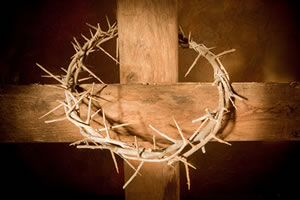
Cross and Crown of ThornsMy God, My God, why have You forsaken Me?
Why are You so far from helping Me,
And from the words of My groaning?
2 O My God, I cry in the daytime, but You do not hear;
And in the night season, and am not silent. Psalms 22:1-2

In Psalms 22, we have the feelings of Christ as He looks back at what He endured upon Calvary’s cross. The Psalm’s heading states that it was set to the tune of “The Deer of the Dawn.” The morning dawn would signify that the night of sorrow had past and that a new day had begun. The figure of a deer brings before us an image of an animal with a keen sense of its surroundings and sensitive to any threat of danger. In contrast, a sheep lacks the survival instincts of a deer. When the topic is atonement, a lamb is found to best represent the submissive nature of Jesus willing to die for our redemption. Whereas a deer is better suited to show the internal feelings of Christ who was keenly aware of everything He endured on the cross.

Strong bulls of Bashan (vs 12) would refer to the leaders of Israel who had a deep-seated hatred of Jesus. Dogs (vs 16) were ceremonially unclean animals in Jewish law and would represent the Roman Gentiles. In verse 21 subject changes from cries of suffering to praises of redemption. Psalms 22 ends with the words, That He has done this. This reminds us of the final words of our Savior upon the cross when, He said, “It is finished!” And bowing His head, He gave up His spirit. John 19:30. While some might think the expression, “It is finished!”, is a cry of defeat, it is exactly the opposite. It is a victory shout (Tetelestai, Τετέλεσται) proclaiming He had satisfied all the claims of a holy God with respect to sin. It signified the completion of redemption. It was a Greek expression stating that a debt had been paid in full. 1

Crook: Psalms 23

The Lord is my shepherd;
Shepherd with CrookI shall not want.
He makes me to lie down in green pastures;
He leads me beside the still waters.
He restores my soul;
He leads me in the paths of righteousness
For His name’s sake.. Psalms 23:1-3

Psalms 23 is the present-day care of Christ for His flock. It is not a distant concern, but a care that Christ has for each one of us individually. Here we find the personal words, such as, me, my, and I. The word me occurs seven times.  It is blessed to have the sense that Jesus is personally concerned about me as an individual. Even though we sometimes must endure trials and pass though the valley of the shadow of death, we know that, when our journey on earth is over, we will dwell in the house of the Lord Forever.

Crown: Psalms 24

CrownLift up your heads, O you gates!
And be lifted up, you everlasting doors!
And the King of glory shall come in.
Who is this King of glory?
The Lord strong and mighty,
The Lord mighty in battle. Psalms 24:7-8

This Psalm looks forward to when Jesus reigns as king. The sufferings of Psalms 22 and Christ’s present-day care for the flock of Psalms 23 will then be past. This psalm gives us a view of the future when the everlasting doors will be opened to Jesus, the King of Glory.

Paul encourages Timothy to be faithful in his service, keeping in mind the coming of Jesus who will judge and reign in His kingdom.

I charge you therefore before God and the Lord Jesus Christ, who will judge the living and the dead at His appearing and His kingdom: 2 Timothy 4:1


1 Moulton & Milligan, The Vocabulary of the Greek Testament, p. 630, 1929.

It’s Just a Field of Lentiles

It’s Just a Field of Lentiles

Next to him was Shammah son of Agee the Hararite. When the Philistines banded together at a place where there was a field full of lentils, Israel’s troops fled from them. But Shammah took his stand in the middle of the field. He defended it and struck the Philistines down, and the Lord brought about a great victory. 2 Samuel 23: 11-12

Vittoriano Museum

In the list of King David’s mighty men in 2 Samuel 23:8-39, we read that Sammah earned the appellation of being one of David’s mighty men by defending a field of lentils.

Now, it might seem insignificant and not worthwhile to risk one’s life over a field of lentils. So, why did Sammah risk his life to defend a plot of lentils? Israel’s troops fled from the Philistines. They thought it would be wise to choose to pick their battles at a more favorable location. But, Sammah thought otherwise. He chose to defend the field of lentils. Sammah knew (1) the field belonged to Israel and that (2) the lentils were food for God’s chosen people. As a result of Sammah’s courage, it is recorded, the Lord brought about a great victory.

Conveying Red Lentils in Turkey

I think we are too ready to surrender small portions of truth to avoid conflict. When we do, we surrender the knowledge of the truth and the sustenance that truth affords for our daily lives. 

Let us remember the words of the Apostle Paul, when, in his last conversation with the elders of Ephesus in the coastal town of Miletus, he reminded them that he ministered to them all the counsels of God. May we not forget the little word, all, and may the example of Sammah defending a field of lentils encourage us to defend even a small field of truth for ourself as well as for the Lord’s people.

For I have not shunned to declare unto you all the counsel of God. Acts 20:27.

So, when you read the list of David’s mighty men, ponder the example of Sammah. Even though he did not attack the enemy’s land, yet, he courageously defended Israel’s land and the crops it produced. So, at least, may we have the courage to defend all the truth of God’s word, so that we can be nourished and grow in everything that God has provided for us.

In Love

In Love

he that dwelleth in love dwelleth in God, and God in him.  1 John 4:16

Couple on the beach at sunset

before him  in love Ephesians 1:4
rooted and grounded  in love Ephesians 3:17
forbearing one another in love Ephesians 4:2
speaking the truth  in love Ephesians 4:15
edifying of itself  in love Ephesians 4:16
walk in love Ephesians 5:2
knit together  in love Colossians 2:2
increase and abound  in love 1 Thessalonians 3:12

We enjoy seeing a couple in love. We are attracted to the loving ways they interact. Being in Love is the most sought after human experience. It is what both young and old seek. It is both human and divine. The ultimate source of true love is God. Love is the highest standard for all human behavior. I think this is why the two words, in love, are in the expressions listed above.

First of all, before the foundations of the world, we were chosen by God the Father to be eternally before Him in love. Also, with Christ dwelling in our hearts by faith we will know that Christ has are rooted and grounded us in love which passeth knowledge (Ephesians 3:19).

Next, this love should flow to others. We should exemplify love to those who are around us. We should not just speak the truth, but we should speak the truth in love.

1 Corinthians Chapter 13 is rightly called the Love Chapter of the Bible. Of all the vitues, love is the greatest. Jesus is the preeminent example of love. In fact, it is edifying to read this chapter by replacing the word love with Jesus. …Jesus is patient, Jesus is kind…Jesus never fails, etc.

And we have known and believed the love that God hath to us. God is love; and he that dwelleth in love dwelleth in God, and God in him. 1 John 4:16

The Lord’s Eyelids

The Lord’s Eyelids

His eyes behold, His eyelids test the sons of men.
Psalms 11:4 1

We might ponder the words of David in Psalms 11, where he mentions the Lord’s eyes and His eyelids. It is true that most commentators teach that the Lord’s eyelids symbolize His eyes squinting as if to inspect more carefully our thoughts and actions .2

However, there may be another thought to consider.  The eyelids are most visible when we are sleeping.  Could it be that the Lord’s eyelids testing the sons of men is meant to teach us that we are specially tested when the Lord seems to have His eyes closed to all the evil that we may have to endure?

Eyelids closed

David had to flee from King Saul who sought to kill him on several occasions.  For example, Saul threw a javelin at David to remove him from his presence.

And it came to pass on the morrow, that the evil spirit from God came upon Saul, and he prophesied in the midst of the house: and David played with his hand, as at other times: and there was a javelin in Saul’s hand. And Saul cast the javelin; for he said, I will smite David even to the wall with it. And David avoided out of his presence twice. 1 Samuel 18:10-11

David served King Saul faithfully, but the king hated him all the more. David felt that the moral foundations of Israel’s society were destroyed. He might have wondered: Does the Lord really see all the evil that I am facing? He asked,

If the foundations are destroyed, What can the righteous do?  verse 3

It seemed as if the Lord was sleeping and that His eyes did not behold all of the evil in the nation of Israel.  No doubt, it was a very difficult time for David as he had to hide from the corrupt leadership in Israel. It is during this time when the Lord does not seem to respond to the evil that we face difficulties that really test our faith. It is as if the Lord’s eyes were covered and that He was unaware of our trials.  Do we trust the Lord, when we face circumstances that seem impossible to endure? 

David encouraged himself by reminding himself that the Lord was still holy and on the throne.

The Lord is in His holy temple; the Lord’s throne is in heaven;  verse 4

He had confidence in the Lord, and he could walk by faith and serve others while waiting upon God’s time to become Israel’s king. Even though he was anointed king, he was willing to live as a fugitive and dwell in a cave. Many who were distressed, discontented, and indebted came to him. May we follow David’s example and encourage others who feel overwhelmed by life’s trials. Even though the Lord’s eyelids seem closed to us, we can be assured that His eyes actually see everything we face as we continue our life’s pilgrimage in faith.  For we live by faith, not by sight. 2 Corinthians 5:7

So David departed from there and escaped to the cave of Adullam; and when his brothers and all his father’s household heard of it, they went down there to him. Everyone who was in distress, and everyone who was in debt, and everyone who was discontented gathered to him; and he became captain over them. 1 Samuel 22:1-2

The last verse of Psalms 11 is a great encouragement to us. It reminds us that the Lord is righteous, just, and that we will see His face. It was David’s faith in the Lord that permitted him to look beyond his trials and to know that, in the end, he would see the Lord’s face.  May we serve Him now as we anticipate glory ahead of us.

For the Lord is righteous, he loves justice; the upright will see his face. Verse 7

References


1. Psalms 11:4, New American Standard Version.

2. Charles H. Spurgeon,  The Treasury of David, “His eyelids try the children of men:” he narrowly inspects their actions, words, and thoughts. As men, when intently and narrowly inspecting some very minute object, almost close their eyelids to exclude every other object, so will the Lord look all men through and through.